
Discover how what your characters say—and what they don’t—can reveal character, create tension, and bring scenes to life.
Ideal for fiction and memoir writers at all levels who want to write more natural, distinctive, and compelling dialogue.

Great dialogue does much more than reproduce the way people talk. It reveals character while concealing motives. It creates tension, builds subtext, moves a story forward—and sometimes, the most powerful dialogue is what a character refuses to say.
In this lively, hands-on two-session workshop, award-winning author and longtime writing instructor Laurie Ann Doyle will show you how to use speech, gesture, silence, and subtext to create dialogue that feels authentic while doing real narrative work.
Through close readings of writers known for their skill with dialogue, you’ll examine how carefully crafted conversations can reveal relationships, sharpen conflict, and deepen characterization. You’ll explore the expressive possibilities of everything from verbal tics and favorite phrases to body language, evasion, and utter withdrawal.
And you won’t just study dialogue—you’ll write it.
Guided free-writing exercises will give you the chance to experiment with characters who are talkative, quiet, evasive, and completely uncommunicative. You’ll have opportunities to share your work in a supportive environment, ask questions about challenges in your own writing, and leave with practical strategies you can put to work immediately.
Laurie’s twin goals for the workshop are simple: to give you concrete tools for writing many different kinds of dialogue—and to let you in on something writers sometimes forget: dialogue can be a whole lot of fun.
Session One: The Basics of Strong Dialogue
Friday, September 18 • 9:30am–12pm PDT
“People may or may not say what they mean, but they always say something to get what they want.” —David Mamet
We’ll begin by looking at what makes dialogue work on the page—and why compelling fictional dialogue isn’t simply a transcription of everyday conversation.
We’ll read and discuss an excerpt from Alexandra Fuller’s memoir Don’t Let’s Go to the Dogs Tonight, explore foundational techniques for writing dialogue, and put those techniques into practice with a guided free-writing exercise and partner sharing.
You’ll also receive a simple assignment for the week between sessions: eavesdrop. Listen closely to the conversations happening around you and jot down lines, rhythms, phrases, or exchanges that catch your attention.
Session Two: Dialogue Challenges—and How to Solve Them
Friday, September 25 • 9:30am–12pm PDT
“I like to listen. I have learned a great deal from listening carefully. Most people never listen.” —Ernest Hemingway
In our second session, we’ll tackle some of the most common problems writers encounter when creating dialogue, including:
- “My characters all sound the same.”
- The information dump
- Using body language and gesture effectively
- Creating meaningful silence
- Knowing when a character should—or shouldn’t—speak
We’ll discuss what you discovered while listening to real conversations, read and examine Raymond Carver’s “Popular Mechanics,” and complete a second guided writing exercise. You’ll have an opportunity to share a short piece with the group and receive support as you put these techniques into practice.
This Workshop is Ideal for
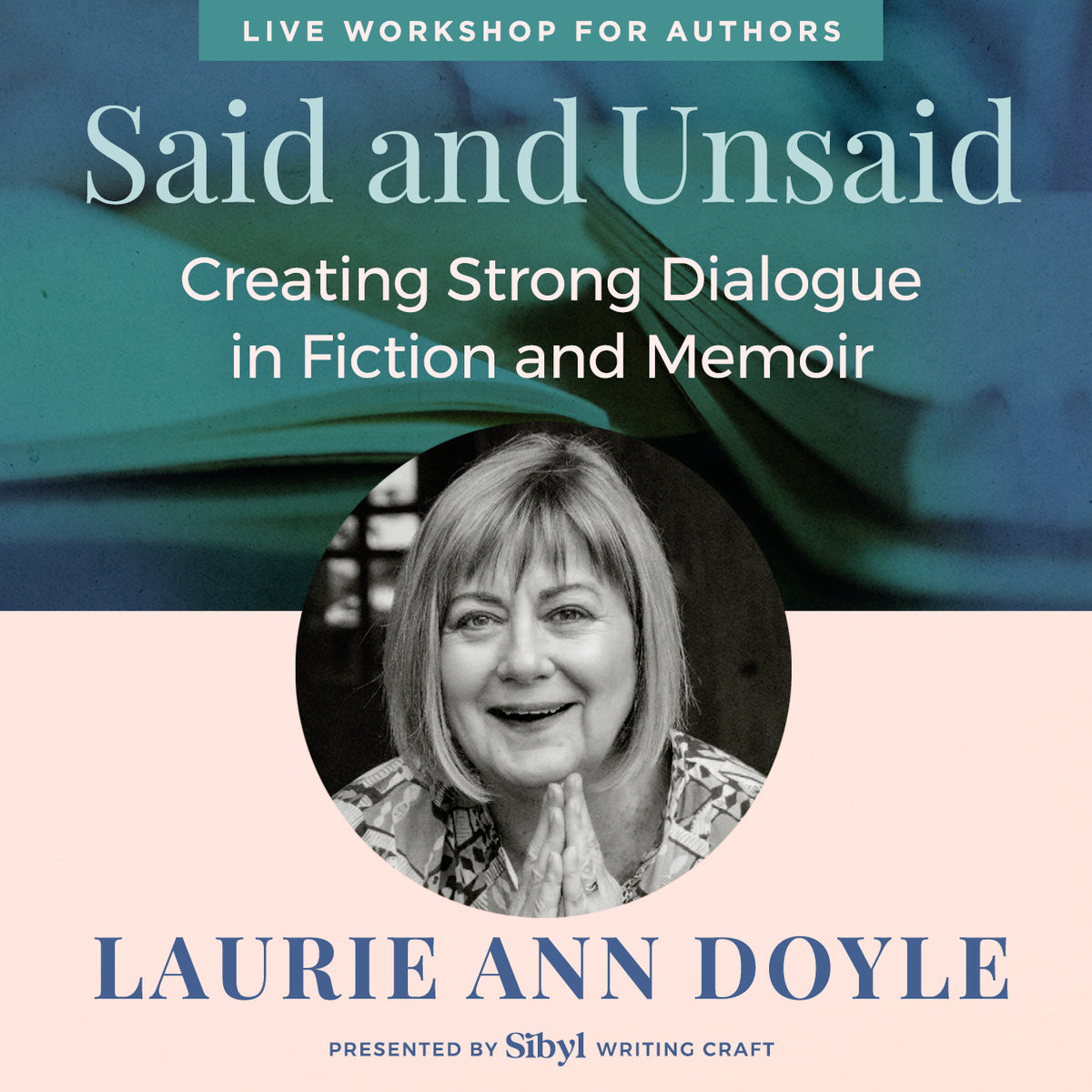
Said and Unsaid: Creating Strong Dialogue in Fiction and Memoir
Friday, September 18 & Friday, September 25 • 9:30am–12pm PDT • ONLINE WORKSHOPS
Choose options
Friday, September 18 & Friday, September 25 • 9:30am–12pm PDT • ONLINE WORKSHOPS
Friday, September 18 & Friday, September 25 • 9:30am–12pm PDT • ONLINE WORKSHOPS
You'll Walk Away With

ABOUT YOUR INSTRUCTOR
Laurie Ann Doyle
Ready to make every conversation on the page count?
Sibyl Writing Craft Workshop FAQ
Yes! Most of our workshops are streamed live on Zoom, allowing you to learn in real time and interact with the instructor. If you can't make it, don’t worry—we will send you a link to watch or download the recording within 24 to 48 hours after the session ends.
Yes! If you can’t attend live (or want to revisit the material), you’ll receive a recording after the session. You can watch it on your own schedule.
Our webinars and workshops will have built in time for Q&A at the end. Some workshop instructors may respond to questions throughout the session, depending on the workshop format.
Many workshops include slides, worksheets, or resource lists that you can download and keep.
No preparation is required unless otherwise noted. Some instructors may offer optional prompts or materials to help you get even more out of the session.
Explore More Workshops and Webinars